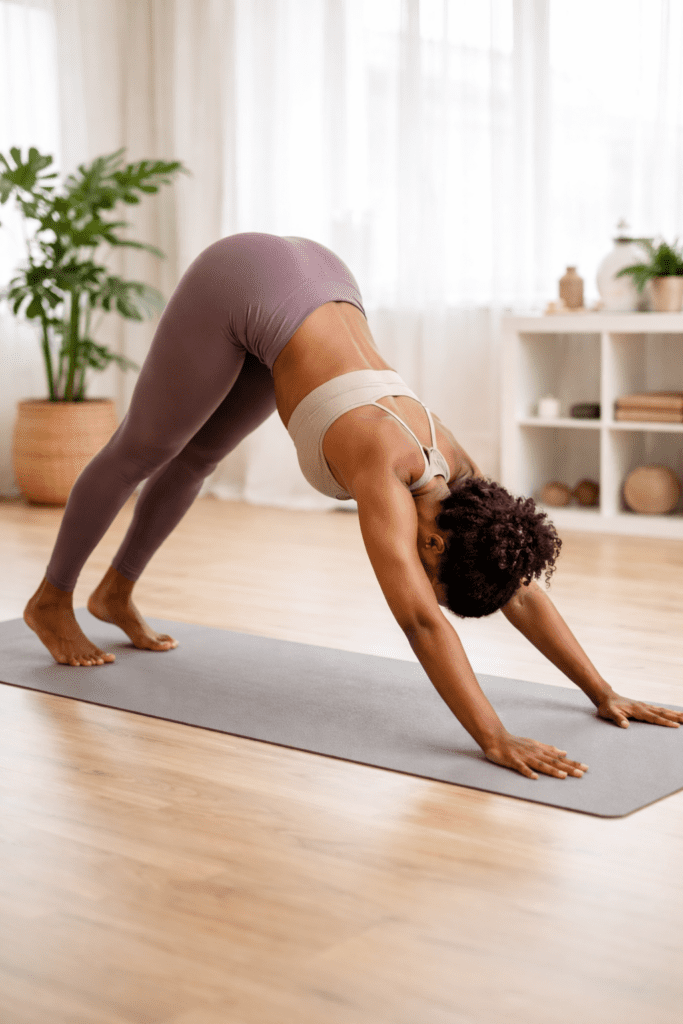
A GREAT FULL BODY STRETCH
The downward dog, also called downward-facing dog, is one of the most well-known yoga poses. You will see it in almost every yoga class, from beginner to advanced. It looks simple, but it does a lot for your body. This one pose can help with strength, flexibility, balance, and even stress relief. Best of all, it can be done at home with no equipment.
Downward dog is a full-body stretch. It works your shoulders, arms, back, hips, legs, and feet all at the same time. When done regularly, it can help improve posture and reduce stiffness that builds up from sitting too much. Many people over 50 notice tight hamstrings, calves, and lower backs. Downward dog gently stretches all of these areas without impact, making it a great option for aging joints.
This pose also builds strength. Your arms and shoulders support part of your body weight, which helps keep your upper body strong. Your legs stay active as well, helping maintain muscle tone. Over time, this can make everyday tasks like carrying groceries or getting up from the floor easier.
Another benefit of downward dog is improved circulation. Because your heart is slightly higher than your head, blood flow to the brain increases. This can help you feel more alert and refreshed. Many people say they feel calmer after holding the pose for just a few breaths. Slow breathing in this position can help reduce stress and tension, which is good for both the body and the mind.
Downward dog may also help with balance and coordination. Even though both hands and feet are on the ground, your body learns to stabilize itself. This can support better balance as you age and may help lower the risk of falls.
Here is how to do downward dog safely and correctly. Start on your hands and knees on the floor. Place your hands shoulder-width apart and your knees under your hips. Spread your fingers wide and press your palms firmly into the floor. Tuck your toes under and slowly lift your knees off the ground. Push your hips up and back so your body forms an upside-down “V” shape.
Keep your knees slightly bent if your legs feel tight. Your heels do not need to touch the floor. Focus on lengthening your spine rather than forcing a stretch. Relax your neck and let your head hang between your arms. Take slow, deep breaths and hold the position for 10 to 30 seconds. As you get stronger, you can hold it longer.
If you have wrist pain, shoulder problems, or dizziness, move slowly and stop if something feels wrong. You can also modify the pose by placing your hands on a chair or wall instead of the floor.
Downward dog is a simple but powerful movement. When practiced regularly, it can help you stay flexible, strong, and calm at any age.