
THE EASIEST EXERCISE TO START WITH
If the word “exercise” makes you picture burpees, spandex, and sore knees… chair yoga is here to lower the bar (and raise your confidence).
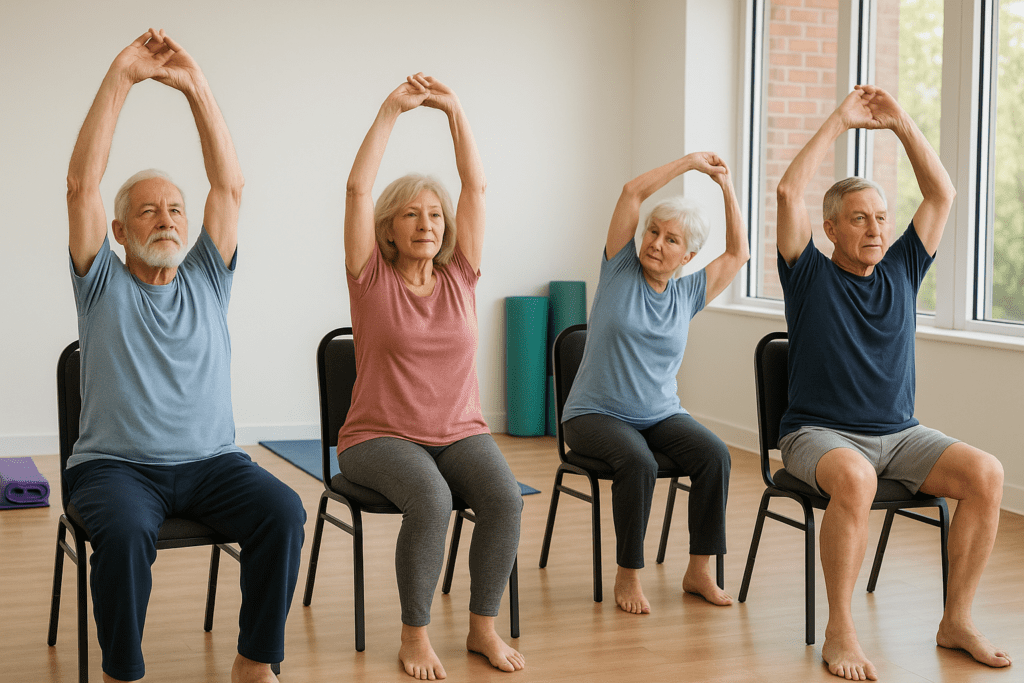
Chair yoga is yoga you do while sitting in a sturdy chair, and sometimes standing while holding the chair for support. It keeps the best parts of yoga—gentle stretching, steady breathing, and slow strength-building—without asking you to get down on the floor or balance like a flamingo.
For many adults over 50, chair yoga is the “gateway exercise.” It’s low-impact, easy to adjust, and friendly to bodies with arthritis, back pain, balance issues, or years of being “too busy” to work out.
And yes—research suggests it can help.
What chair yoga involves (no pretzel shapes required)
A typical chair yoga class looks like this:
- Breathing practice (1–3 minutes): slow breaths to calm the nervous system
- Warm-up moves (5–10 minutes): gentle neck rolls, shoulder circles, ankle pumps
- Seated poses (10–25 minutes): slow stretches for hips, hamstrings, chest, and back
- Strength and balance practice (5–15 minutes): chair-supported squats, leg lifts, heel raises
- Cool-down (3–10 minutes): relaxed breathing and gentle stretching
You may hear names like “seated cat-cow,” “seated twist,” or “chair warrior.” Don’t worry about names. What matters is this: you move your joints through safe ranges, practice posture, and build control.
Why chair yoga works so well for older adults
1) It improves flexibility and joint comfort
As we age, we tend to move less, and stiff joints become a daily complaint. Chair yoga uses slow stretches that can improve how your body feels when you get out of bed, reach overhead, or walk up stairs.
In studies of older adults, chair yoga programs have been linked to improvements in function and daily activity ability, including in people with knee osteoarthritis. PMC
2) It can reduce pain (especially arthritis pain)
One of the strongest areas of research is chair yoga for osteoarthritis.
A randomized controlled trial of an 8-week chair yoga program for older adults with lower-extremity osteoarthritis found improvements in things like pain interference (how much pain disrupts life), and also reported benefits like improved gait speed in some outcomes. PubMed+1
That’s a big deal—because when pain stops running the show, people move more.
3) It supports balance and may lower fall risk
Falls are a major reason older adults lose independence. Chair yoga helps with balance in a “training wheels” way—using the chair for support while your legs and core get stronger.
A pilot study of modified chair yoga in very old adults (including those at fall risk) found it was feasible and safe, and suggested potential functional benefits worth studying further. PMC
Also, public health guidelines emphasize balance and strength work as we age—exactly the kind of movement chair yoga can provide. CDC+1
4) It helps mood, stress, and sleep (the “quiet wins”)
Chair yoga combines movement with breathing and mindful attention. For many people, this is where the magic is.
A meta-analysis on yoga and neuropsychiatric outcomes in older adults found evidence that yoga can reduce depression with small-to-medium effects, even when results for anxiety and cognition were mixed. ScienceDirect
Translation: chair yoga isn’t a cure-all, but it may help you feel calmer, sleep better, and show up to your day with a little more patience (which your family will deeply appreciate).
5) It’s a realistic “on-ramp” to exercise after 50
Many people don’t need more motivation—they need a plan that doesn’t hurt.
Chair yoga is:
- Low impact (gentle on joints)
- Scalable (easy to make easier or harder)
- Convenient (living room-friendly)
- Confidence-building (you can succeed on day one)
That last part matters. When exercise feels doable, it becomes repeatable. And repeatable turns into a habit.
What the bigger picture of research says (an honest take)
Chair yoga research is growing, but it’s not perfect.
- Many studies show benefits for pain, function, mood, and flexibility. PubMed+2PMC+2
- Larger trials don’t always find big changes in broad outcomes like overall quality of life—though they often find chair-based yoga is safe and acceptable, and some participants value it a lot. University of York+1
So here’s the practical takeaway: chair yoga is not hype, but it’s also not magic. It’s a safe, smart tool—especially for beginners, people in pain, and anyone who needs a gentle starting point.
How to start chair yoga safely (especially if you have medical issues)
Pick the right chair:
- sturdy, no wheels
- ideally no arms (arms are okay, but may limit movement)
- feet flat on the floor
Use this simple safety rule:
- You should feel stretch, not sharp pain.
- You should feel worked, not wrecked.
If you have any of these, talk with your clinician first:
- frequent falls or severe dizziness
- recent surgery
- unstable heart symptoms (chest pain, fainting, severe shortness of breath)
- severe osteoporosis with fracture risk
And if you’re starting from “zero,” start tiny:
- 5–10 minutes, 2–3 days/week
- then build up slowly
Consistency beats intensity every time.
A simple “first week” plan (easy and realistic)
Try this for 7 days:
- Day 1: 8 minutes chair yoga
- Day 2: short walk (5–10 minutes)
- Day 3: 8 minutes chair yoga
- Day 4: rest or gentle stretching
- Day 5: 10 minutes chair yoga
- Day 6: short walk
- Day 7: 10 minutes chair yoga
If you do this, you’re not “starting to exercise.”
You’re becoming someone who exercises. Big difference.
Want a home chair yoga class?
If chair yoga sounds like the kind of exercise you could actually stick with, follow the link in this newsletter to investigate getting a home class on chair yoga. Having someone guide you (even virtually) can make it safer, easier, and a lot more fun.
https://5f97ecy1q6w2hvfzudw655lg0i.hop.clickbank.net/?&traffic_source=blog&traffic_type=email