
If you’ve ever seen a yoga class, you’ve probably seen Downward-Facing Dog, often called simply “Down Dog.” It may look like a simple stretch, but this classic yoga pose is one of the most effective full-body movements you can do. It improves flexibility, builds strength, enhances posture, and helps you move more comfortably in everyday life.
The good news? You don’t have to be flexible to benefit from Down Dog. In fact, this pose can be modified for almost anyone, making it an excellent choice for adults over 50.
Why Downward-Facing Dog Is So Beneficial
Down Dog works nearly every major muscle group at the same time. As you press your hands into the floor and lift your hips, you strengthen your shoulders, arms, upper back, and core while stretching your hamstrings, calves, chest, and spine.
Regular practice can help:
- Improve shoulder mobility
- Increase flexibility in the hamstrings and calves
- Strengthen the upper body and core
- Improve posture
- Reduce stiffness after sitting for long periods
- Enhance body awareness and balance
Because it gently lengthens the spine, many people also find that it helps relieve tension in the back and neck. If you have significant back pain or another medical condition, talk with your healthcare provider before beginning any new exercise program.
How to Perform Downward-Facing Dog
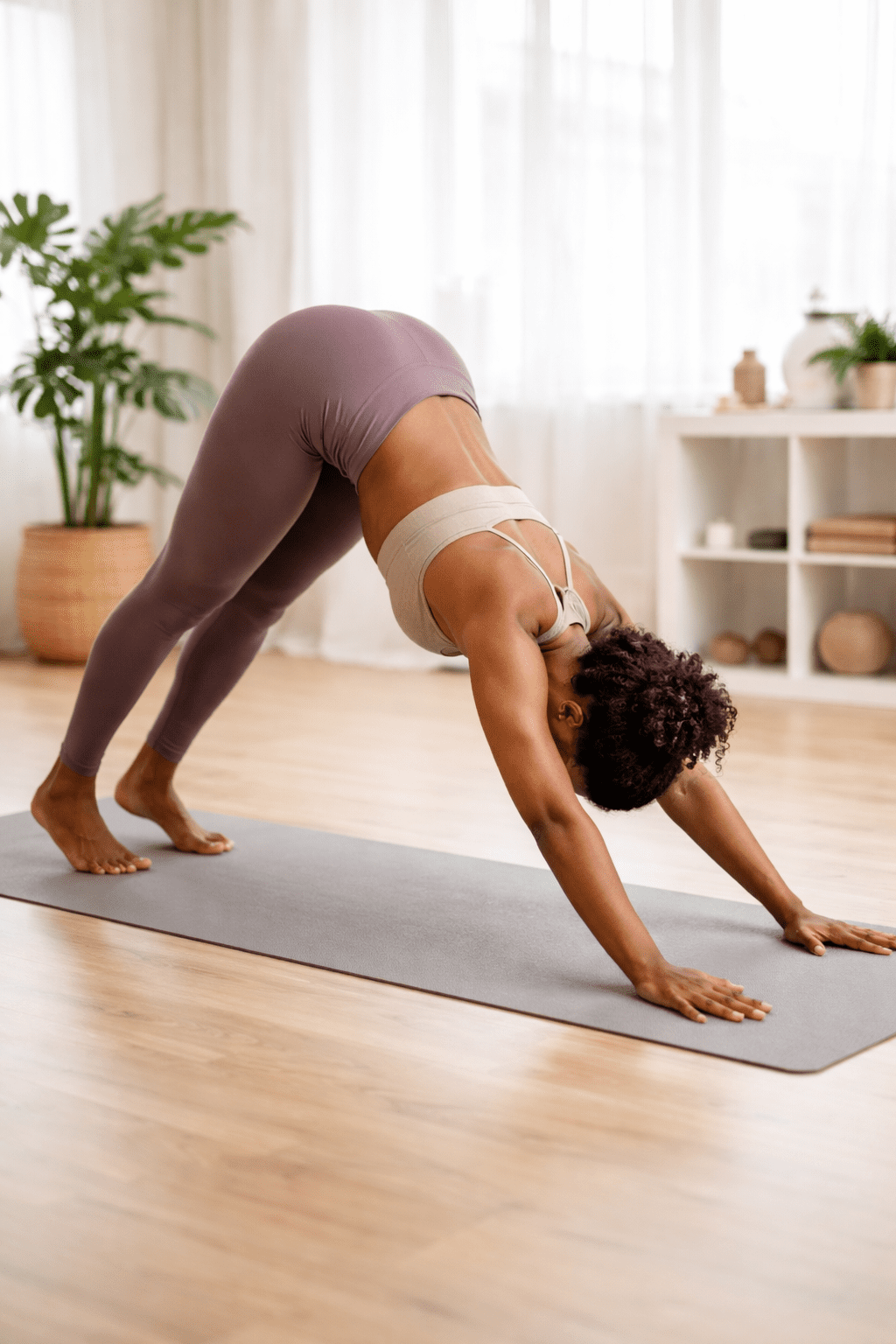
- Begin on your hands and knees with your hands directly under your shoulders and knees under your hips.
- Spread your fingers wide and press firmly through your palms.
- Tuck your toes under.
- Slowly lift your knees off the floor while raising your hips toward the ceiling.
- Straighten your legs only as much as is comfortable. It’s perfectly fine to keep a slight bend in your knees.
- Let your head relax naturally between your arms while looking toward your feet.
- Press your chest gently toward your thighs and lengthen your spine.
- Hold the position for 15–30 seconds, breathing slowly and deeply.
- Lower back to your hands and knees and repeat 2–3 times.
The goal isn’t to get your heels to the floor. Focus on creating a long, comfortable spine rather than forcing flexibility.
Beginner Modification
If getting on the floor is difficult, try a Wall Down Dog.
Stand facing a wall and place your hands on it at shoulder height. Walk your feet backward until your arms are straight and your body forms an “L” shape. Push your hips backward while keeping your back long. You’ll enjoy many of the same stretching and strengthening benefits with much less pressure on your wrists and shoulders.
Dr. Mike’s Prescription
Think of Downward-Facing Dog as a full-body tune-up. It strengthens the muscles that help you carry groceries, reach overhead, and maintain good posture while stretching the muscles that often become tight with age. You don’t have to hold it perfectly or look like an experienced yogi to benefit. Practice it a few times each week, move at your own pace, and you’ll likely notice improved flexibility, better posture, and easier movement in your daily life.